Introducing your healthcare partner 'CardioCare'

Prioritize your well-being by nurturing your heart health. Remember, a healthy heart is the cornerstone of a vibrant life. Take steps today to ensure a healthier tomorrow.

Learn More

Take care of you by taking care of your heart

Empowering You to Take Control of Your Heart Health...
1. Predict Heart Attack Possibility
2. Predict Future Heart Attack Risks
3. Identify Heart-Healthy Foods
4. Find Nearby Pharmacies
Trust CardioCare to be your reliable partner in maintaining a healthy heart.

Watch Now

Developer team of 'CardioCare'

"We are a dedicated team of final-year undergraduate students with a passion for improving heart health. Combining our expertise in technology and healthcare, we developed CardioCare, a mobile app designed to support heart health and wellness. Our goal is to make heart health management accessible and effective for everyone."

Follow More
Our Research Topic

Integrative Approach to Cardiovascular Health Management

Heart diseases remain a significant global health challenge, emphasizing the importance of early intervention and prevention. In addressing this issue, a mobile application was developed with components focusing on predicting the risk of becoming a heart patient, predicting the risk category of a heart patient, food item identification and dietary recommendation, and suggesting best rated nearby pharmacies to fulfill a doctor's prescription. All these components include trained deep learning algorithms to assure a reliable performance within each component. In predicting the risk of becoming a heart patient, a trained logistic regression algorithm was used. As for predicting the risk category of a heart patient, a trained k-nearest neighbors algorithm was used. For the components of food item classification and suggesting best rated nearby pharmacies, YOLOv5 and TextBlob were utilized respectively. Results show that accuracies of the results from each component is significant enough for mass scale utilization of all the components of our mobile application in improving life standards of heart patients.


Our Team Supervisors

Dr. Kapila Dissanayaka
(Supervisor)

Faculty of Computing
Malabe

Mrs. Bhagyanie Chhathurika
(Co-supervisor)

Faculty of Computing
Matara

Our Team Members

Dewantha Appuhamy
(Group Leader)

Department of Information Technology

Oshada Geeth
(Group Member)

Department of Software Engineering

Parami Navodya
(Group Member)

Department of Software Engineering

Tharindu Lakshan
(Group Member)

Department of Information Technology

Research Problems and Solutions

- Develop a user-friendly mobile application that integrates the Logistic regression model for predicting heart attack possibility and stratifying risk levels into five categories (Red, Orange, Yellow, Green , White) based on WHO guidelines.
- Develop a user-friendly mobile application that integrates YOLOv5 model to identify food items and giving the calory amount, and helpful tips for the patient according to his condition.
- Develop an automated system that utilizes machine learning algorithms to analyze ECG medical records, predict future heart disease-related issues, and generate a graph chart for visual representation of the patient's current and predicted future status.
- The application provides a streamlined and efficient way for users to locate pharmacies, assess their reputation through predicted ratings, and ensure medicine availability.
Research Objective

What We Provide for Your Health

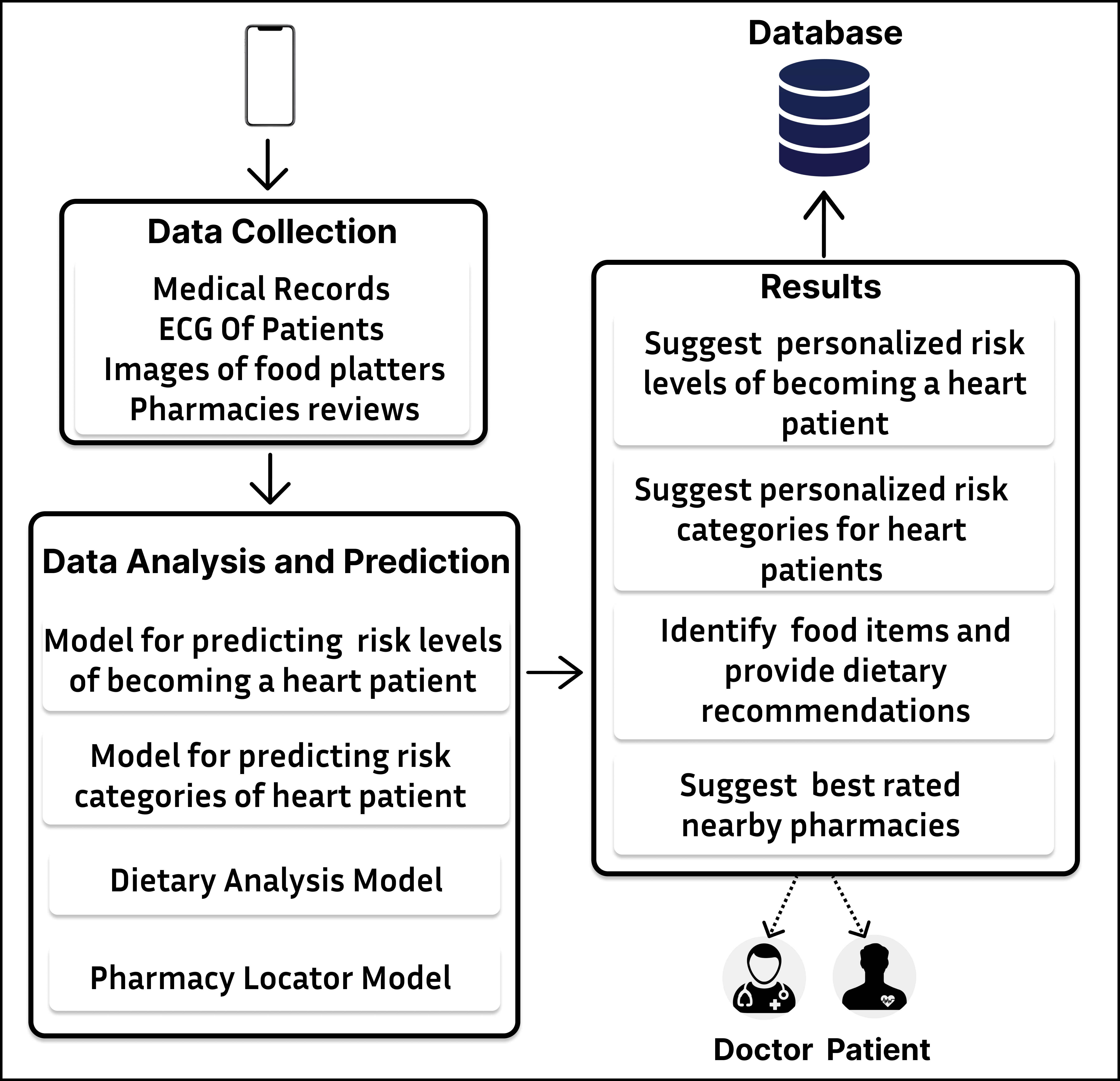
Our team designed the mobile app for the convenience of heart patients and doctors focusing on risk assessment and control of heart disease. Here, the risk of a person becoming a heart patient can be found earlier. And a person who is at risk of heart disease should be advised to follow a diet. Another unique feature here is the ability to automatically analyze the ECG reports and predict the risk situations that he or she may face in the future by comparing them with the previously obtained reports. A patient can find the nearest pharmacy to get the prescription through this mobile application as well.

Predicting Heart Attack Probability
Healthy Dietary Guidance
ECG Automated Analysis and Generated graph chart for identify risk level
Pharmacies Indexing Based On Patient's Reviews
Overall system diagram

Research Methodology and Results

The methodologies described in the documents focus on developing predictive and guidance systems using machine learning for various healthcare applications. In the first methodology, a comprehensive survey was conducted among doctors in Sri Lankan hospitals to understand diagnostic challenges for heart disease. Data encompassing a wide range of demographic and health-related factors were collected and preprocessed for analysis. A logistic regression model was trained to predict the probability of becoming a heart patient, with risk levels stratified according to WHO guidelines. The final tool includes a user-friendly interface for patients and healthcare providers, offering clear risk communication and management instructions. The second methodology involves developing dietary guidance by training a model on a large dataset of food images, specifically curated for Sri Lankan food. The YOLOv5 architecture was used for model training, and the system provides dietary recommendations based on individual user profiles, enabling informed dietary choices aligned with health goals.

The third methodology uses machine learning to analyze ECG records, classifying heartbeats into four categories and extracting relevant signals from ECG images for further analysis. A k-nearest neighbors model was trained to classify these signals, visualizing the risk levels for different heart conditions. The fourth methodology focuses on developing a system to identify the best-rated nearby pharmacies using user location, medicine availability, and customer ratings. The app integrates with Google APIs to find and rank pharmacies based on sentiment analysis of patient reviews. TextBlob is used for sentiment analysis, classifying reviews as positive or negative and assigning sentiment ratings. The Multinomial Naïve Bayes algorithm is then applied to display higher-rated pharmacies, enhancing user access to top-rated local pharmacies.
The proposed system addresses significant health management challenges by employing machine learning models for predicting heart attack risks and offering dietary guidance. A logistic regression model predicts heart attack probability with high accuracy (94% training, 93% testing) and stratifies risks into five levels based on WHO guidelines, providing clear, actionable instructions. The user-friendly interface enhances understanding and navigation for both patients and healthcare providers. Additionally, a mobile application identifies food items from user-uploaded images with 85% accuracy for common Sri Lankan foods, aiding in informed dietary choices. An ECG analysis model using KNN achieves a 96% training accuracy but 88% testing accuracy, categorizing heart conditions into three risk levels. The system also successfully identifies nearby top-rated pharmacies using customer reviews and Google Maps, improving healthcare accessibility.
We used to develop the mobile app

Technologies and Tools

Our team designed the mobile app for the convenience of heart patients and doctors
from using below various technologies and tools.

| Flutter |

Used for UI design and front-end design

| Python |

Used for backend development and model training

| Google Colab |

Code for machine learning algorythms

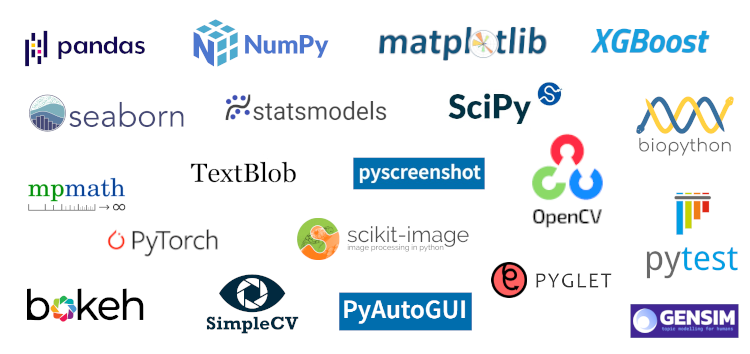
| Python Libraries |

YOLOv5, Textblob and other libraries to develop the models

| Google Map API |

Patient can find the nearest pharmacy to get the prescription through this mobile application as well

| Firebase |

Main database for the system

Documentation Download

Research Documents and Presentations

Contact Us

Please, use the information below to contact us

Email : cardiosyncpro.2k24@gmail.com


Campus Email : info@sliit.lk


Campus Phone : +94 11 754 4801